|
|
|
|
Cooking Terms Explained -
Almonds |
A
B C
D
E
F
G
H
I
J
K
L
M
N
O
P
Q
R
S
T
U
V
W
X
Y
Z
Almonds in Cooking
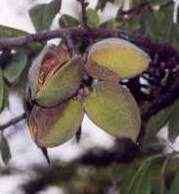 |
Almonds are oval
shaped fruit from the tree Prunus dulcis (sweet or bitter almond),
a close relative to the apricot and peach tree. The tree originates
from the Middle East and thrives only in warm climates. The major
producers of almonds are Italy and Spain for the European markets
and California for the American market.
Sweet and bitter almonds are used for
cooking but bitter almonds are poisonous so must be used carefully
and in the correct quantities. |
Almonds have been used in
cooking for thousands of years and they are mentioned in the Bible. In
ancient Greece, the nuts were crushed and mixed with honey to make
marzipan.
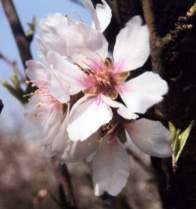
| Sweet almonds are most commonly
used in cooking and they come from a pink flowering tree (see
picture on the right).
Bitter almonds come from a very similar tree which is white
flowering. These almonds contain prussic acid which will kill a
human even if taken in small quantities. Cooking crushed bitter
almonds removes much of the dangerous acid (although some will
remain). The uncooked bitter almond is by far the most dangerous
form. |
 |
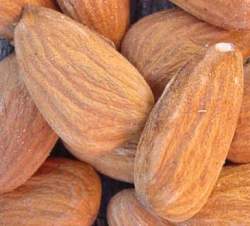
Sweet almonds can be
eaten raw, roasted or grilled with salt. They are commonly used in
savoury dishes, cakes and deserts where they are normally ground or
crushed. Almonds are best stored in an airtight container and keep best
in the fridge.
 |
To roast or
toast almonds, pre-heat the oven to 180°C / 350°F / Gas Mark
4. Place the almonds (whole) in a single layer on a baking tray
and roast for around 8 minutes. Almonds burn easily so keep an
eye on them whilst they are cooking.
To blanch
almonds, place them in a bowl and pour on boiling water.
Leave them in the hot water for 4 minutes. Take each almond out
individually, squeeze it between your fingers and the skin will
slide off. |
|
|
|