|

Custom Search
|
|
Custom Search
|
| BEEF | PORK | LAMB | POULTRY | FISH | EGGS | PIES & CAKES | VEGETARIAN | ETHNIC | SUBMIT YOUR RECIPE HERE | |||||
| SLOW COOKER | JAMS | BARBECUE | GAZPACHO | PAELLA | TAPAS | VIDEO RECIPES | LATEST MEMBER RECIPES | |||||||
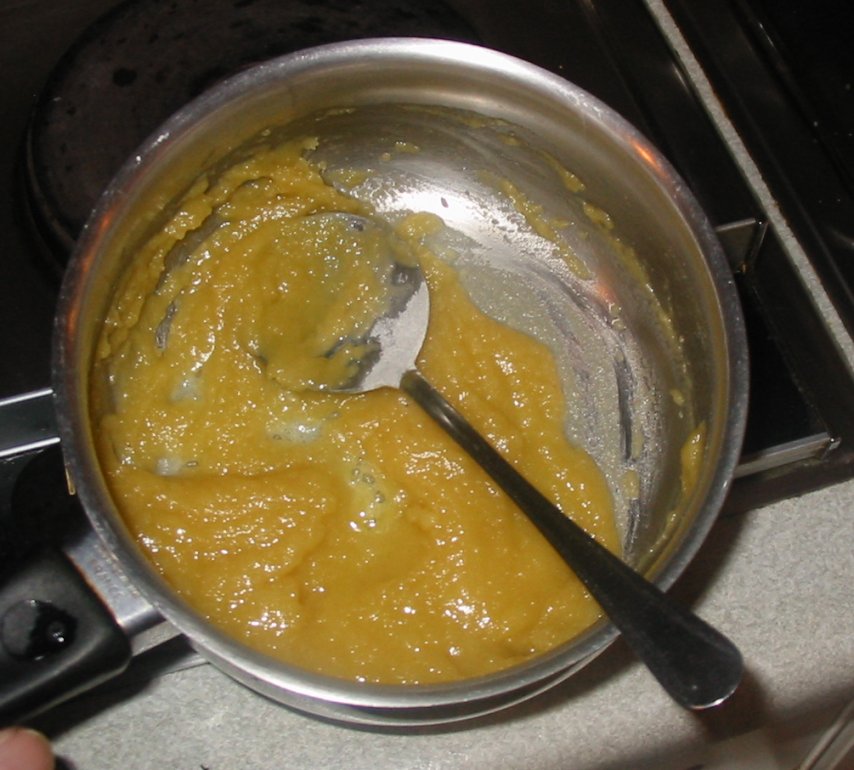
Ingredients: 2 large cod fillets 3oz butter 1 medium onion sliced Tea cup of fish or vegetable stock 1 level teaspoon curry powder (or to taste) 150ml / ¼ pint double cream Salt and pepper to taste 2oz butter and 2oz flour for the Roux (see picture and instructions below) How to Make Roux
Cooking Method 1. Make the Roux as described above. 2. Flake the fish into a frying pan, add the butter and onions and cook on a medium heat until light brown (approximately 8 minutes). 3. Add the stock and roux, mixing well and cook on a low heat for 10 minutes. 4. Add the curry powder, salt and pepper and cream, and bring to the boil. Immediately it starts to boil, remove the pan from the heat and serve with rice. THE COD CODFISH - Cod may be boiled whole; but a large head and shoulders are
quite sufficient for a dish, and contain all that is usually helped,
because, when the thick part is done, the tail is insipid and overdone.
The latter, cut in slices, makes a very good dish for frying; or it may
be salted down and served with egg sauce and parsnips. Cod, when boiled
quite fresh, is watery; salting a little, renders it firmer. THE HABITAT OF THE COD —This fish is found only in the seas of the northern parts of the world, between the latitudes of 45° and 66°. Its great rendezvous are the sandbanks of Newfoundland, Nova Scotia, Cape Breton, and New England. These places are its favourite resorts; for there it is able to obtain great quantities of worms, a food peculiarly grateful to it. Another cause of its attachment to these places has been said to be on account of the vicinity to the Polar seas, where it returns to spawn. Few are taken north of Iceland, and the shoals never reach so far south as the Straits of Gibraltar. Many are taken on the coasts of Norway, in the Baltic, and off the Orkneys, which, prior to the discovery of Newfoundland, formed one of the principal fisheries. The London market is supplied by those taken between the Dogger Bank, the Well Bank, and Cromer, on the east coast of England. THE FECUNDITY OF THE COD —In our preceding remarks on the natural history of fishes, we have spoken of the amazing fruitfulness of this fish; but in this we see one more instance of the wise provision which Nature has made for supplying the wants of man. So extensive has been the consumption of this fish, that it is surprising that it has not long ago become extinct; which would certainly have been the case, had it not been for its wonderful powers of reproduction. “So early as 1368,” says Dr. Cloquet, “the inhabitants of Amsterdam had dispatched fishermen to the coast of Sweden; and in the first quarter of 1792, from the ports of France only, 210 vessels went out to the cod-fisheries. Every year, however, upwards of 10,000 vessels, of all nations, are employed in this trade, and bring into the commercial world more than 40,000,000 of salted and dried cod. If we add to this immense number, the havoc made among the legions of cod by the larger scaly tribes of the great deep, and take into account the destruction to which the young are exposed by sea-fowls and other inhabitants of the seas, besides the myriads of their eggs destroyed by accident, it becomes a miracle to find that such mighty multitudes of them are still in existence, and ready to continue the exhaustless supply. Yet it ceases to excite our wonder when we remember that the female can every year give birth to more than 9,000,000 at a time.”
|
|